Creating green spaces and places with young people
06-11-2025
Get started with...
Case study
Guidance
©National Trust Images / Rebecca Hughes
06-11-2025
Get started with...
Case study
Guidance
©National Trust Images / Rebecca Hughes
‘Children are more at risk from environmental problems than adults but their views and interests are often left out of decisions’ (Article 12, UNCRC).
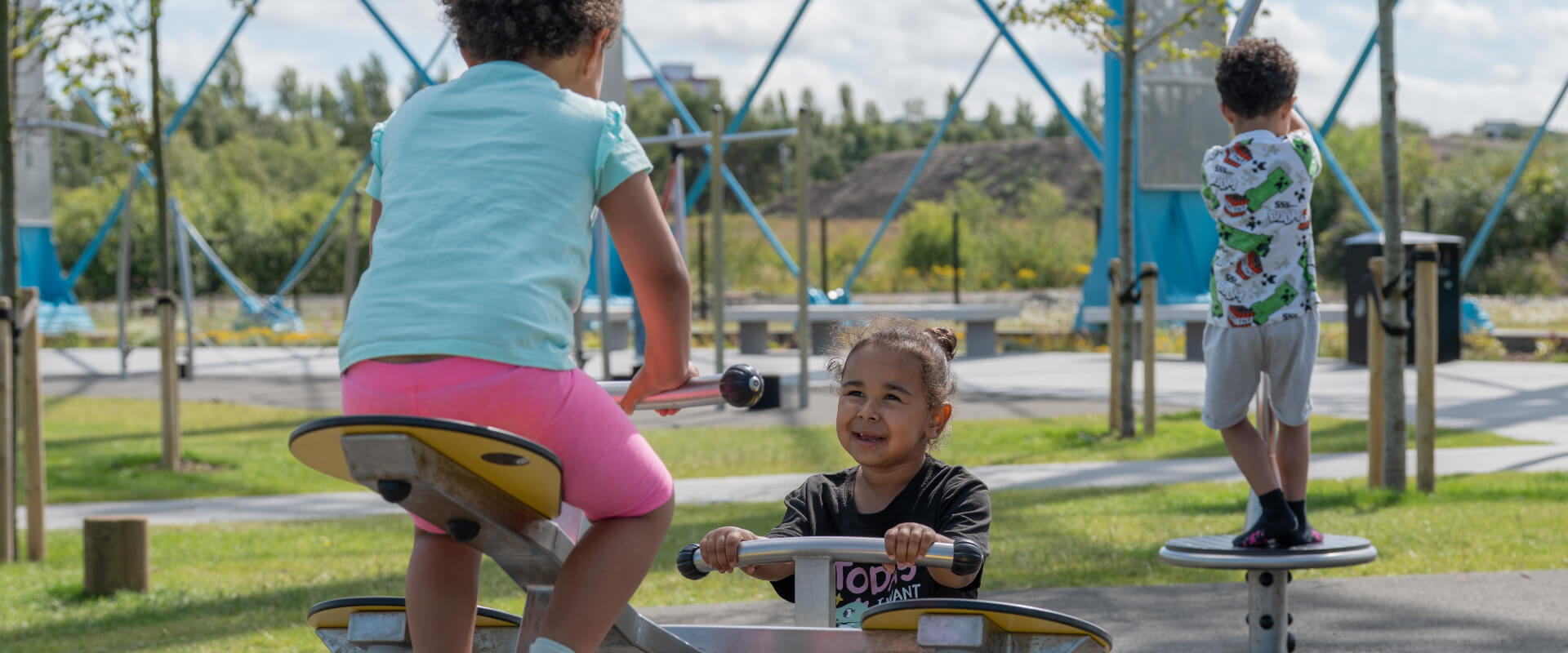
Children and young people aren’t just the future voices of our urban green spaces, they can be powerful advocates right now. And they speak for 20% of today’s population in our towns and cities.
Only they can tell us what it’s actually like to be them and what matters. They can explain what our fast-changing world looks like through their eyes and what’s missing. They bring new perspectives and insights, including those often excluded from traditional consultations. They can also challenge our views of what they need from their green spaces, and what would truly make a difference to them.
This guide will help your local authority understand what inclusive place-shaping might look like for different ages, backgrounds and abilities. It will help you to meaningfully engage children and young people and add a new dimension to your urban green space transformation.
Co-designing with children and young people helps ensure our natural green spaces become even more inclusive. Creating places for different types of play, areas for adventure, socialising, relaxing and building connections with nature.
And it’s not just about the answers. The process of simply asking questions can deliver powerful socioeconomic benefits that include:
As you start planning your consultations, these three resources can help set the scene:
When we work with rather than for children and young people, everyone benefits. This five-step guide can help you engage in meaningful and inclusive ways to transform urban green spaces for everybody. These steps are designed to be flexible and can be followed and revisited in whatever order works for you and the young people in your community.
Looking for inspiration on where to start with engaging / involving children and young people?
From green space questionnaires to musical interpretation and emoji walks, scroll down to discover inspiring engagement ideas and case studies from organisations including local authorities and their partners.
Suggested age group: 8 to 25 years old
Set structured questions to gather opinions from your young audience. UPSIDES: it’s quick to do and easy to scale. DOWNSIDES: it offers limited depth of insight and may exclude younger or less literate participants.
Birmingham City Council collected personal stories to understand emotional connections to green spaces. Young children were asked to submit artwork that showed what nature meant to them. This qualitative approach informed the Council’s 25-year City of Nature Plan and engaged young people in a way that felt more accessible.
Discover the stories
Projects in Wincanton and Leeds used surveys and focus groups to understand how teenage girls use parks and public spaces. Wincanton’s short survey, distributed through schools, and Leeds’ in-depth questionnaire for girl skateboarders highlight how to reach underrepresented voices in public space design.
See the surveysSuggested age group: 0 to 25 years old
Run facilitated sessions to explore ideas collaboratively. UPSIDES: it offers rich insights, builds trust and has great co-design potential. DOWNSIDES: it can be time-intensive and requires specialist facilitation to ensure inclusive engagement.
The National Education Nature Park is a core component of the Department for Education’s Sustainability and Climate Change Strategy. It provides a way for children and young people to improve the biodiversity of their nursery, school or college grounds, spending more time in nature whilst learning outdoors.
Find out more and explore resources by age group
Walk Wheel Cycle Trust put young voices at the core of local transport strategies in Wadebridge and Padstow. Workshops with pupils and school communities gave pupils confidence to attend and speak at public events and uncovered challenges and ideas that could have been overlooked, such as safe crossings. In Bristol, pupils and Walk Wheel Cycle Trust co-designed features like rain gardens to improve surface water drainage. These are helping to prevent flooding and improve local water quality.
Read about Southmead’s SuDS
The London School of Economics and Political Science joined forces with Brent Youth Parliament and the Blueprint Collective, to explore how young people experience and want to shape public spaces. It resulted in a co-designed space and policy recommendations.
Read about the project
Archibeats ran co-design workshops that led to three approved green space designs, in partnership with Lewisham Borough Council and the National Trust. They enabled young people aged 8 to 22 to take part in a series of walkabouts across the Sayes Court Estate, using music, clay, stories and InDesign models to capture their thoughts and help shape green plans for the estate’s future.
Music to our ears
64 million artists designed a creative, open-space format for 18- to 30-year-olds to explore social and environmental issues through hands-on art and dialogue. This encouraged deep reflection and collective action through playful, participant-led sessions.
Discover Gather Round
A Place in Childhood were commissioned to engage 146 teenagers across Scotland, to explore their experiences of public spaces. Using a combination of online and offline workshops, the results highlight the importance of safe, welcoming environments and the need for youth-led design to combat antisocial behaviour and exclusion.
Read the report
Suggested age group: 5 to 18 years old
Draw out views and ideas through games, mapping, storytelling and visual tools. UPSIDES: they can be highly engaging, provide a greater level of accessibility and encourage leadership. DOWNSIDES: they need to be adapted for different age groups and contexts, which can be time intensive.
The Royal Society of Arts has designed this nature-based play and learning initiative for children aged 0 to 11. Co-created with communities, it transforms green spaces into playful, ecological classrooms that foster environmental stewardship from an early age.
Get playful ideas
This toolkit from Greenspace Scotland inspires young people to take the lead in their local community, voice their opinions and help make positive change happen. It includes a game, workshop frameworks, tools to help run a community mapping exercise and more.
Explore the toolkitCreated by Girlguiding Scotland’s Speak Out Champions in partnership with Make Space for Girls, this campaign empowers girls aged 4 to 18 to assess and improve their local parks. The badge pack includes activities that help girls critically evaluate public spaces and advocate for safer, more inclusive environments.
Get in the zone
Edinburgh City Council is supporting pupils to design and care for ecologically rich spaces to be used as outdoor classrooms. The city council’s Wild Wee Spaces are a vital part of the Edinburgh Nature Network, helping to boost biodiversity and capture carbon. They nurture connections between children and nature, giving them a sense of ownership over the local green space.
Find out more
Playground pop-ups, local fairs, a street party and a co-design play day with over 50 children helped Walk Wheel Cycle Trust (formally Sustrans) put the needs and ideas of hundreds of local children at the heart of an architectural design brief for play space on the Barkantine Estate on the Isle of Dogs. Meanwhile street pop-ups, a schools’ street design competition and emoji walkabouts in Southwark engaged over 500 children in plans to tackle high levels of childhood obesity in the borough.
Read what Southwark did
Suggested age group: 16 to 25 years old
Empower young people to lead or advise on projects. UPSIDES: they build a sense of ownership and encourage long-term stewardship, offering key skills development to young people about to enter the workplace. DOWNSIDES: support structures and training are key to making these work.
In Colliers Wood, young people worked with Living Proof and the National Trust to co-design a new urban park. Their consultation shaped the vision for Pickle Park, transforming an inaccessible site into a nature-rich, inclusive space.
Hear their views
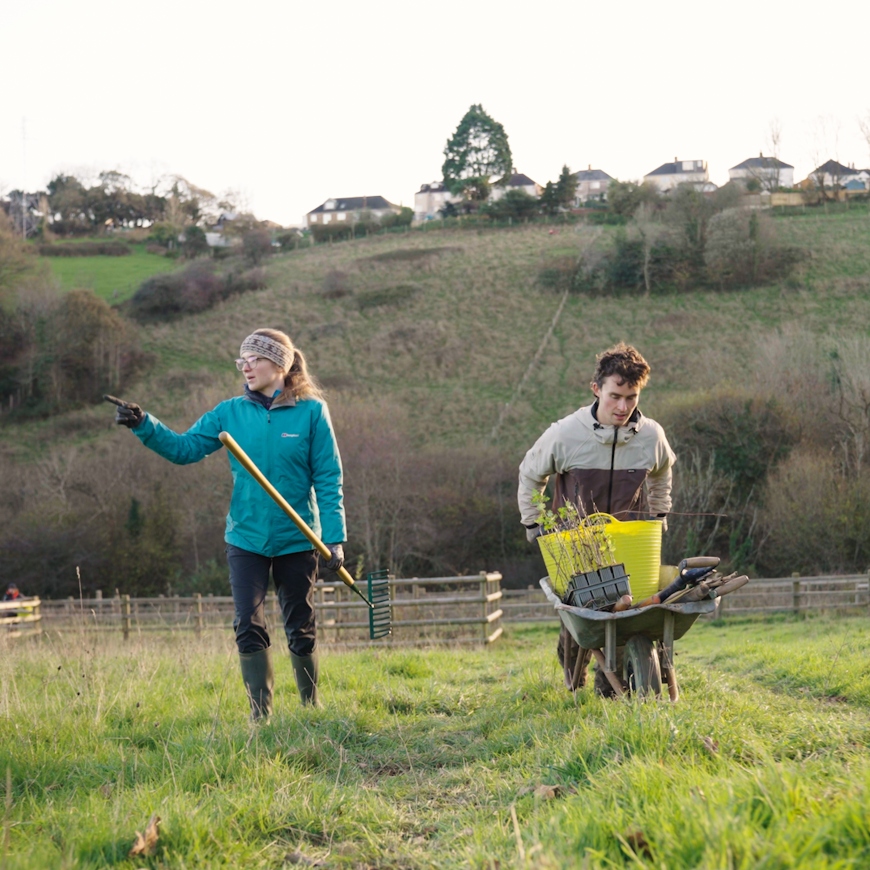
Plymouth and South Devon Community Forest’s (PSDCF) scheme is creating the next generation of leaders, putting young people at the heart of decisions and development in the woodland. It is youth-led, with members working alongside the PSDCF team and Plymouth City Council to help manage and grow the Community Forest.
Discover Forest RisingGroundwork supports young people to lead environmental projects in their communities in Greater Manchester. Participants receive mentoring, training and funding to design and deliver green space improvements, from rewilding to community events.
Read about Green LeadersThis partnership, led by The Wildlife Trusts from 2016 to the end of 2022, brought together the youth and environmental sectors. Over 128,000 young people were involved in the programme, helping to improve more than 3,000 community spaces and creating over 350 nature-rich areas for people and wildlife. There was a huge focus on youth-led decision making and governance and several high quality ‘how to’ resources were produced.
Use the resourcesSuggested age group: 10 to 25 years old
Students studying advertising and creative courses at UAL: London College of Communication and Oxford Brookes University were challenged by the Agency for Nature to imagine how they would respond creatively to nature as a “client” looking to get young people into urban spaces. The results were immersive storytelling, films and installations that inspired young people to connect emotionally with the environment and advocate for its protection.
See the campaigns
An augmented reality trail co-created by Aardman and the Wildfowl & Wetlands Trust enabled children to explore wetlands through the eyes of Lloyd the housefly, learning about insects and habitats in a playful, unexpected way. The trail included a free augmented reality app and activity packs.
Discover the buzz