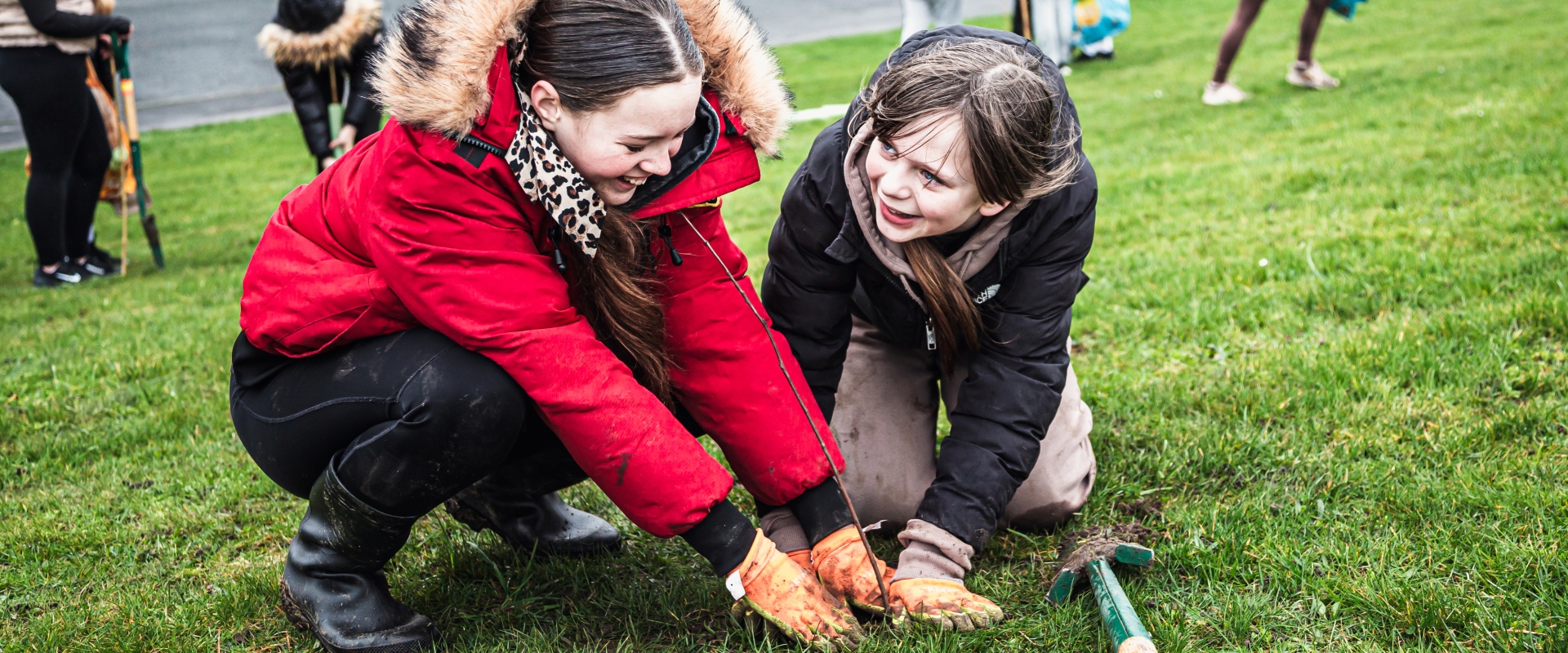
Close-up of two children as they pat the ground around a newly-planted tree sapling. One wears a bright red coat and an even brighter smile. The other also looks happy with their work.
White illustration of a tree resembling a fan.

Nature Makers: Leah Johnstone

30-07-2026

Meet the nature makers

Case study

From drinking up excess rainwater to better wellbeing, urban trees make great neighbours. Hear how Trees for Cities is improving tree equity scores across Hartlepool.
Partners - Children & young people

©ChrisJParker

In conversation with

Leah Johnstone

Project Manager, Tree Equity for Hartlepool

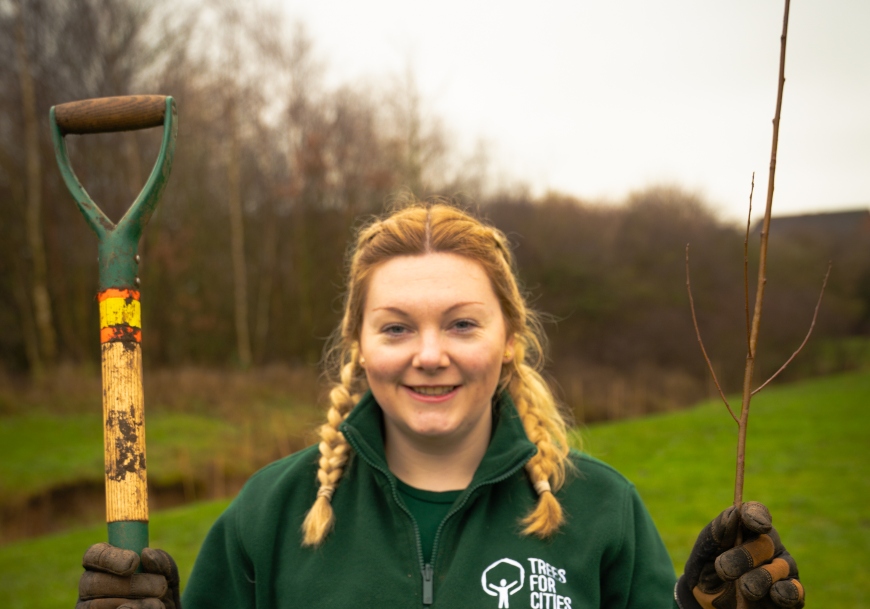
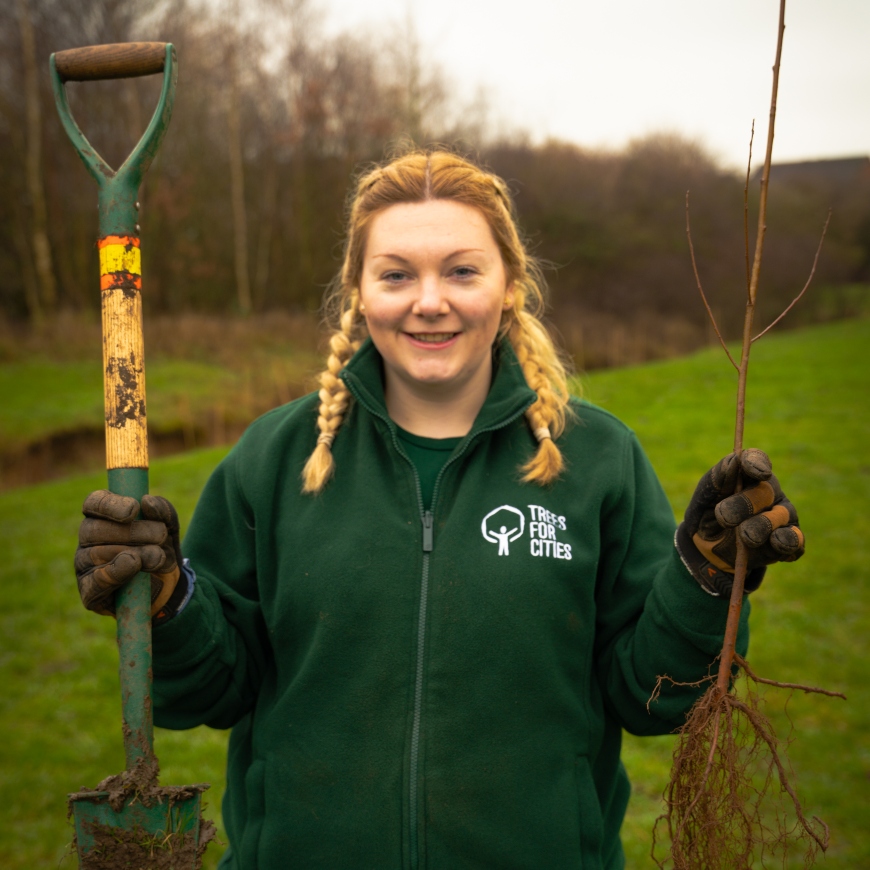
A young lady with pigtails smiles at the camera. She's holding a tree sapling and a shovel, and looks ready to get planting with gloves and a 'Trees for Cities' fleece.

New life in urban tree deserts

Urban tree planting charity Trees for Cities believes that everyone deserves equal access to trees. And they’re turning Hartlepool green – working with local communities to dramatically increase the town’s canopy cover.

Hartlepool may be beside the sea, but like many coastal towns it has ‘urban tree deserts’. These areas have some of the lowest levels of tree canopy cover in the UK, where entire communities miss out on the many health and wellbeing benefits that trees provide – known as ‘tree inequity’.

In a UK first, Trees for Cities is turning over a new leaf in Hartlepool’s urban desert. Armed with local tree data and resident views, they’re planting trees not just where they’re most needed, but where they’re most wanted too.

“We want to transform Hartlepool from one of the lowest scoring areas in the UK for tree equity, to being recognised as a Tree City of the World” says Leah Johnstone, Tree Equity for Hartlepool Project Manager.

“Hartlepool is the flagship model for our new strategy, which aims to grow a nationwide movement for urban trees and tree equity by 2030.”

Leah talks to us about how Trees for Cities and their partners – including The Woodland Trust and Tees Community Forest Trust – are guiding local people towards a more equitable urban oasis.

A greener, healthier future for Hartlepool

Hartlepool’s proud history is rooted in shipbuilding and ironworks, with local folklore claiming it built and bred more millionaires than anywhere else in England.

Fast forward to today, and the town faces high levels of deprivation and low levels of resourcing for things like nature and green spaces. Some areas have zero percent tree canopy cover, and data shows it has the second-lowest level of tree equity in England.

Looking ahead, Leah explains how Tree Equity for Hartlepool’s vision and partnership will ensure that every person, in every corner of Hartlepool benefits from trees.

The Tree Equity for Hartlepool project is part-funded by The National Lottery Heritage Fund and The Linbury Trust, supported by Hartlepool Borough Council, Tees Community Forest, The Woodland Trust, Thirteen Group and Treeconomics.

A young lady with pigtails smiles at the camera. She's holding a tree sapling and a shovel, and looks ready to get planting with gloves and a 'Trees for Cities' fleece.

©Trees for Cities

Planting the seeds together

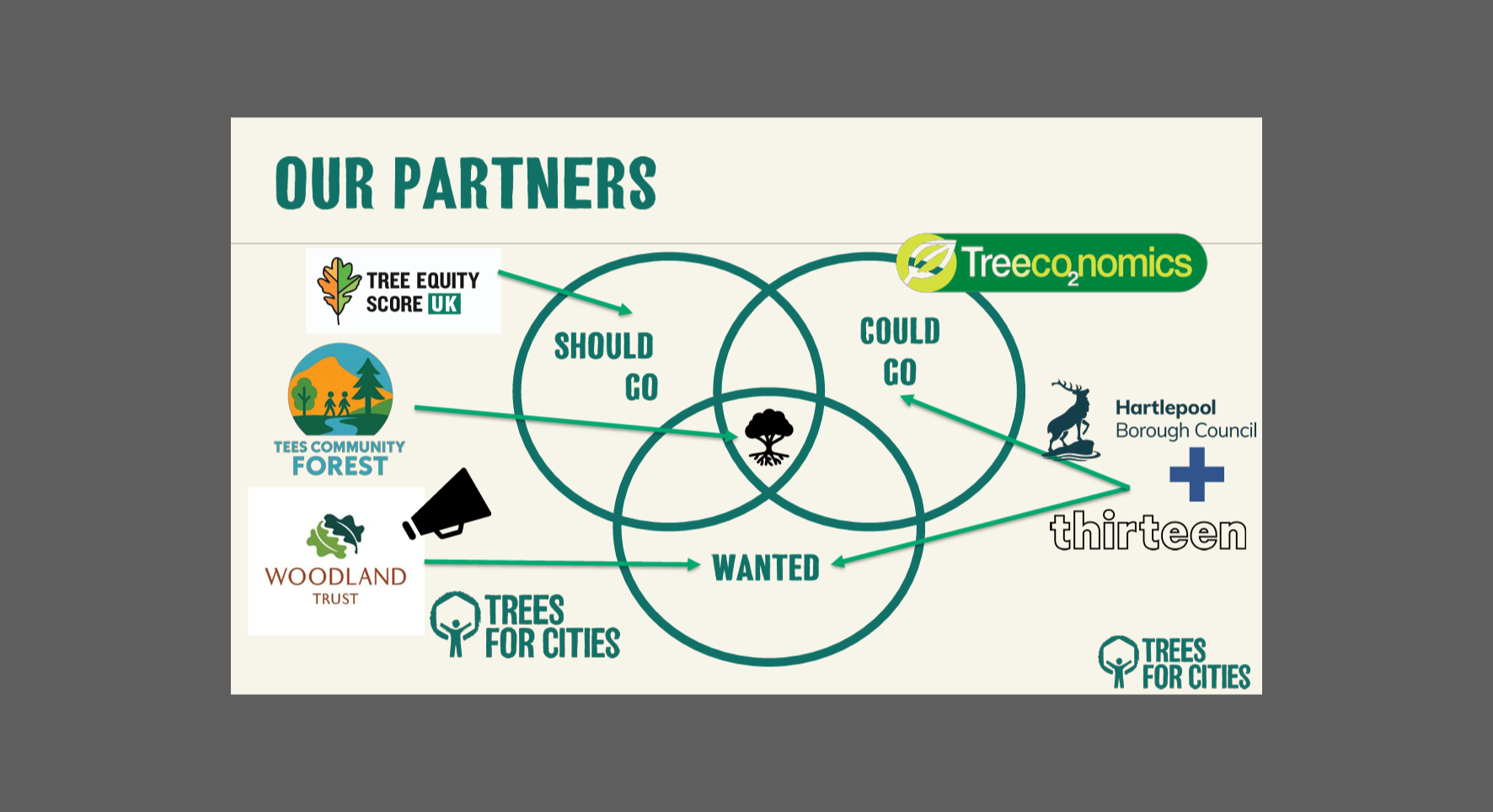
Trees for Cities’ Hartlepool project is grounded in partnership working and community engagement. Click the cards to discover more about the role of partners in different stages of the project.

1

Where trees should go

2

Where trees could go

3

Where trees are wanted

4

Plans into action

Four things to celebrate

Halfway through the project, Leah and the team are already seeing positive changes towards a more healthy, sustainable and equitable urban forest for Hartlepool.

5.38

The number of hectares where trees have been planted so far

This puts the project on track to complete all the planting planned for this first phase of the project.

1820

The number of local people engaged with the project, beating the target of 1,500

The project also launched a Community Grants fund for community groups wanting to champion the urban forest.

+4,000

The number of whips and standards planted to date

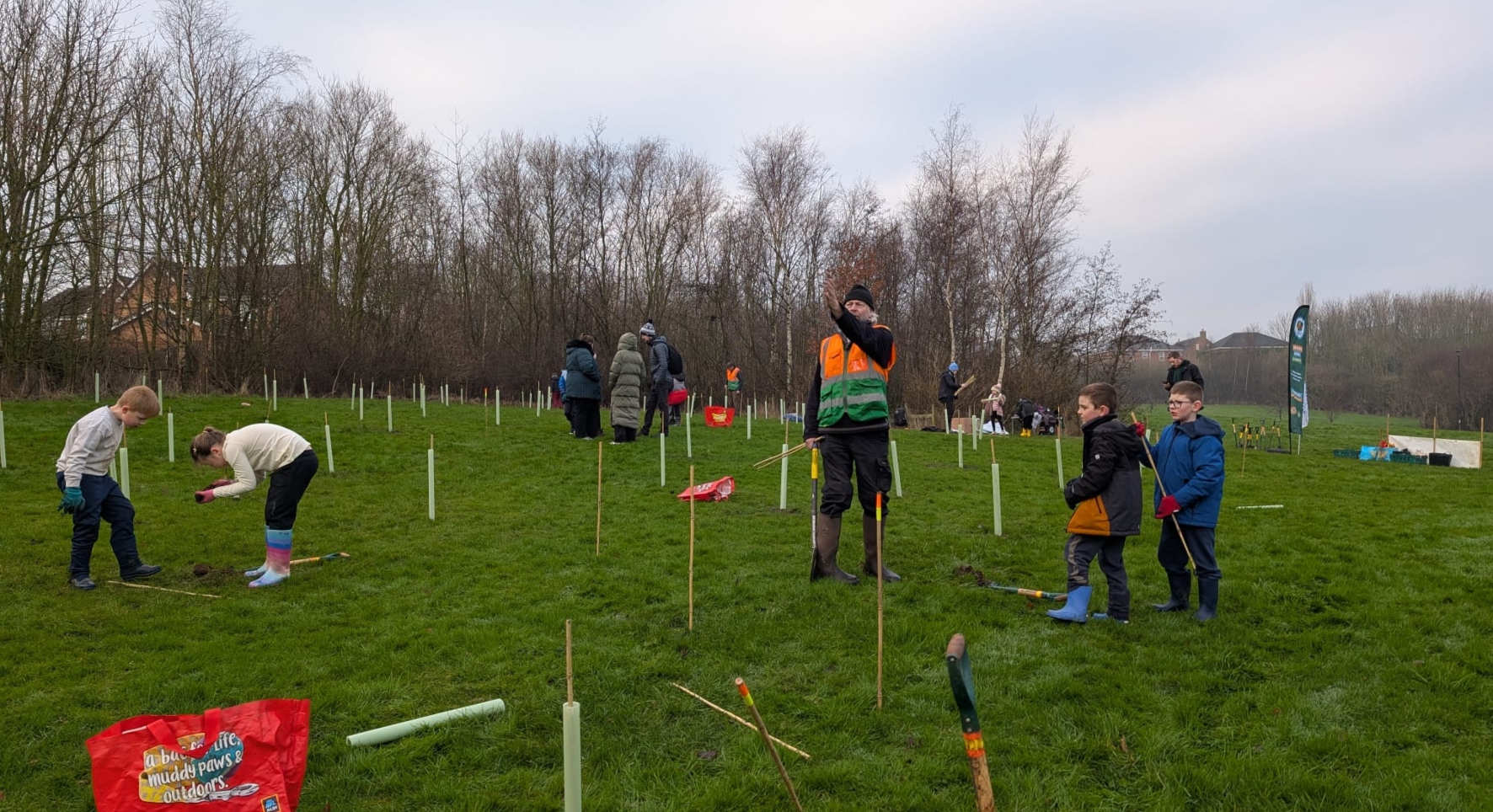
Local communities are invited to take part in all the tree planting for the project, as well as tree and bird ID walks.

5

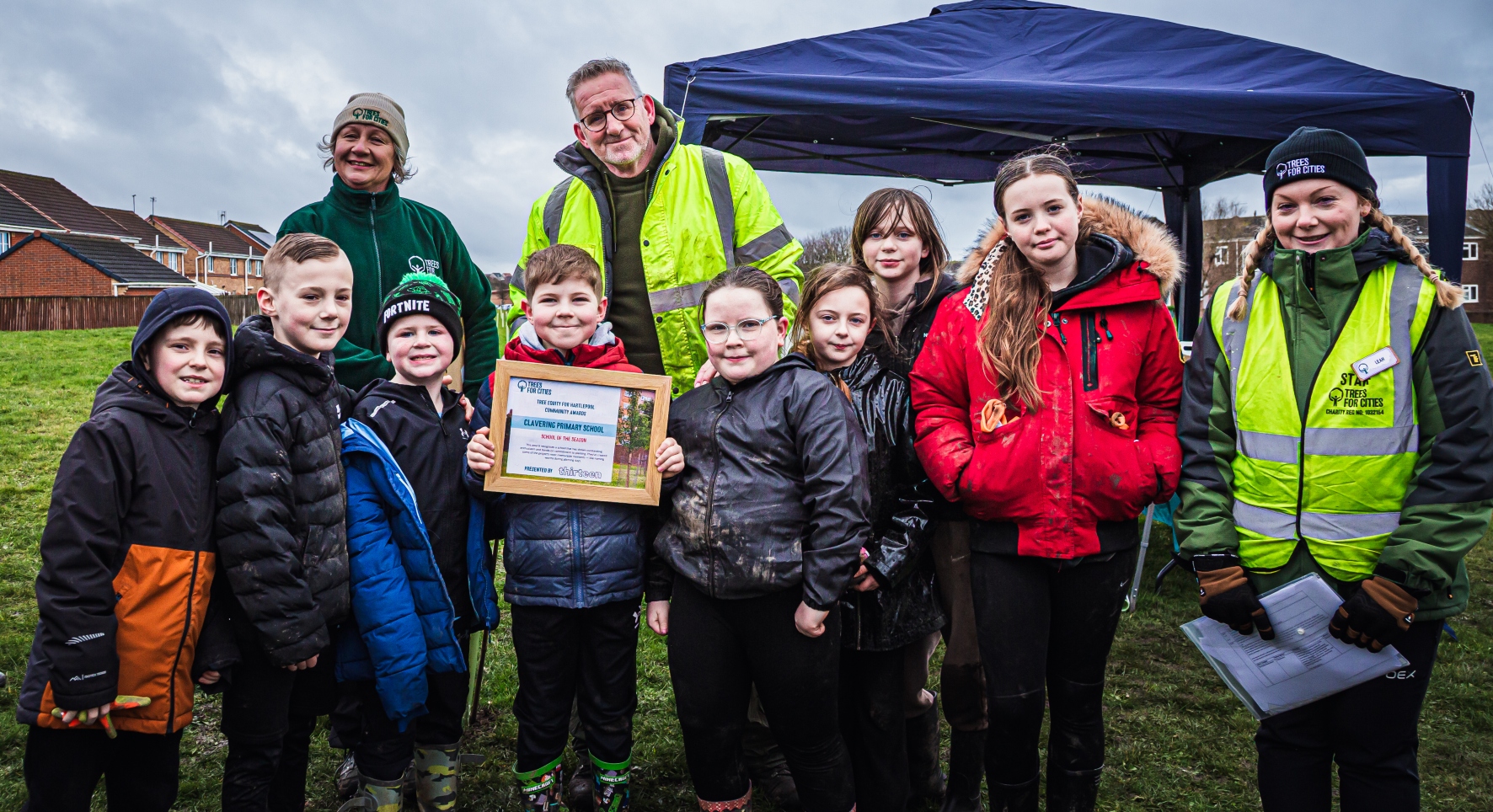
The number of community awards given out at the first annual tree celebration

The project itself was also shortlisted for an Ashden Award for Nature-Based Climate Solutions.

Rising to the challenge

Like any project working towards change, Tree Equity for Hartlepool has faced some challenges over the first few months.

Leah shares what they have learnt about planting in low tree equity areas, and what they’ll do differently in the planting seasons to come.

“The main challenge we have faced is vandalism of the trees planted” says Leah, “and it can be upsetting to see the mindlessness of it.”

They’ve learnt that community mapping on its own isn’t enough. Despite thorough engagement and outreach, important details can still create bumps in the road. For example, the project team didn’t realise that one of the planting areas was at higher risk of vandalism as it crossed a cut through route that older children take home from school.

“So we need to look at the social web, not just communities and organisations but a whole tapestry weaved from local knowledge” Leah shares.

“Another learning for us is that to work towards tree equity, funding needs to reflect the realities of planting in low tree equity areas” says Leah.

The project has found that funding must support social infrastructure through community engagement first, before the tree planting can succeed.

“Tree equity scores brought us to the town and showed us where trees are needed – with lower scores having fewer trees. However, what we also began to realise is there is a second layer of thinking.” She explains, “Not only do these scores show where trees are needed, they can also show how funds should be spent – areas with lower tree equity scores require higher social investment, and comparatively less direct spend on trees.”

Firmly rooting for the future

The project is currently running until May 2027, so there’s still plenty more to come in Hartlepool. The team is thinking longer-term too. Leah explains how they’re planting deeper roots that will ensure trees remain where they are most needed (and wanted) for years to come.

Master-planning an urban forest

“Our Urban Forest Masterplan for Hartlepool has finished public consultation and is now going through final drafting, before being submitted to elected council members for approval. Cross-party support for the plan puts trees firmly on the local political agenda, as essential green infrastructure for the town that everyone should benefit from.”

Following the North Star

“We’re carrying out even more detailed mapping with Treeconomics, using the 3:30:300 rule. It’s Trees for Cities’ ‘North Star’ principle, helping us see what good, fair access to nature, trees and green space looks like in a place. This work will shape longer-term investment by showing the impact of interventions and planned developments on trees.”

The 3:30:300 rule
The 3:30:300 rule

Funding future seasons

“Planting funding from our partner Tees Community Forest Trust covers tree care costs into the future, including three years’ hands-on maintenance. We’re hoping to extend our project funding by another five or seven years too – we’ve got plenty of hectares - and community members - ready and waiting for trees!”

Spreading the word

“At a local level, we’re encouraging Hartlepool Borough Council to cultivate and grow their tree warden scheme with the Tree Council. Beyond Hartlepool and with support from The Woodland Trust, I’ve shared presentations about our work at an all-parliamentary group on woods and trees in Westminster and at the European Forum on Urban Forestry.”

Growing a love for trees

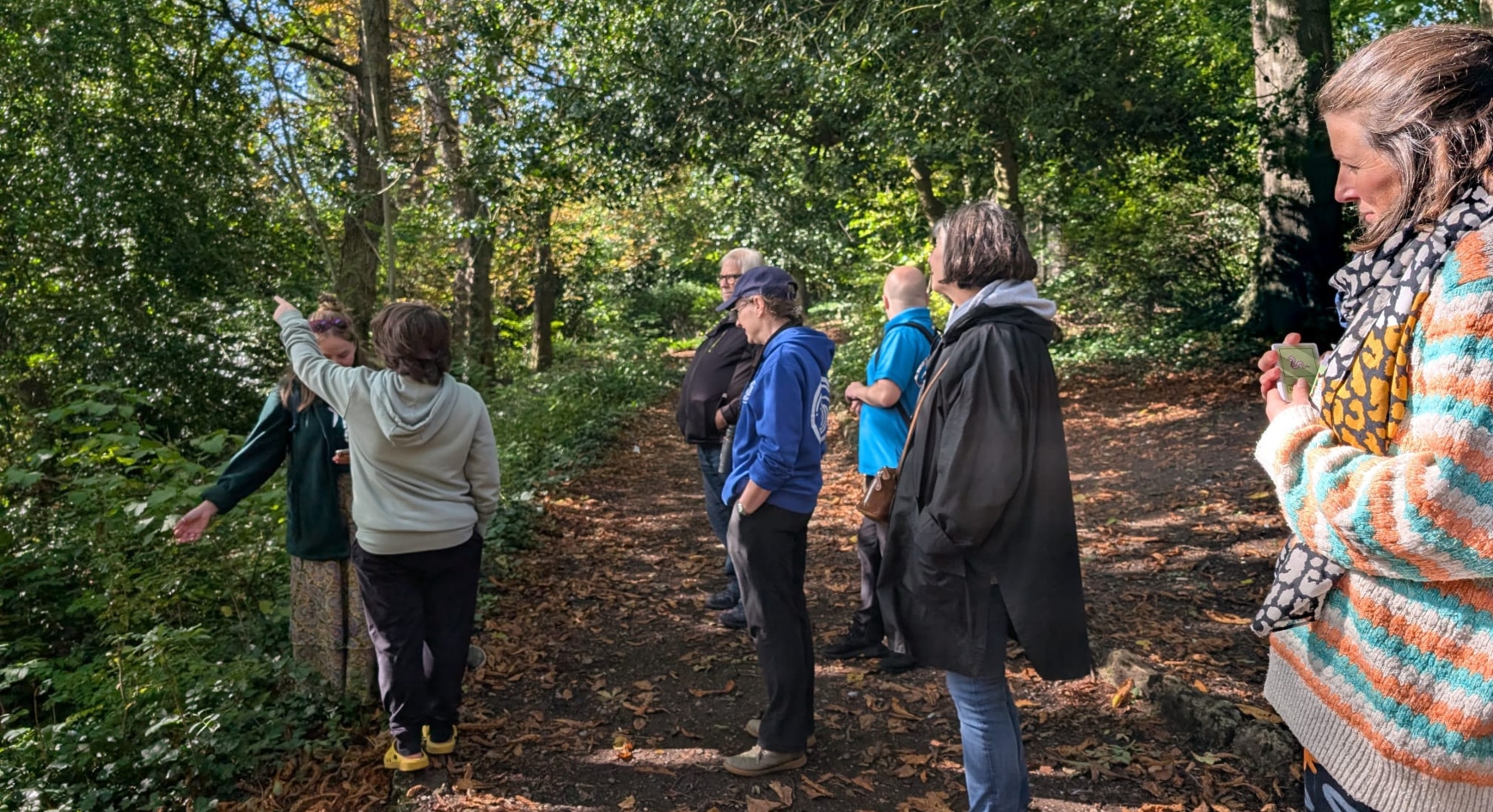
“We’re offering lots of ways for people to experience and understand their local trees in new, exciting ways. Things like tree warden training and volunteer skills building in bird and tree identification are popular. We even gave people the chance to carry out an ‘ultrasound’ on a beautiful Hungarian Oak, to help check the condition of each part.”

Investing in our ‘saplings’

“We have a moral obligation to plant for future generations, but many young people in Hartlepool have had little opportunity to experience the benefits of trees. A lack of understanding increases the risk of vandalism, so we’re reaching out to them through boxing clubs and youth offending schemes to try and change this.”